How I got the corner office without a degree
By Peter Ivanoff


 |
| Peter Ivanoff |
A highly experienced, marketing operations executive who has demonstrated the ability to lead diverse teams of professionals to new levels of success in a variety of highly competitive industries, cutting-edge markets, and fast-paced environments.
Strong technical and business qualifications with an impressive track record of more than 20 years of hands-on experience in strategic planning, business unit development, project and product management, and system engineering strategies.
Proven ability to successfully analyse an organisation's critical business requirements, identify deficiencies and potential opportunities, and develop innovative and cost-effective solutions for enhancing competitiveness, increasing revenues, and improving customer service offerings.
Towards the end of 2014, it was already apparent that South Africa had a real problem with the proliferation of fake degrees.
One didn’t have to look very far to see how people in high places had made it into the c-suite with fake qualifications. Take the infamous former COO of the SABC, Mr. Hlaudi Motsoeneng, who was appointed into this position of huge responsibility and power but was recently found not to even hold a matric certificate.
And unfortunately, Mr. Motsoeneng is in good company. There are many people in positions in public office and parastatals who claim to have academic qualifications which simply don’t exist or have been fraudulently tampered with.
Another notable example is former ANC spokesman Carl Niehaus who was forced to step down in 2009 after it was revealed that he had left a broad trail of financial mismanagement, racking up R4.5 million in debt, and lied about having a master’s degree and a doctorate in theology from the University of Utrecht.
As early as 2010, the Mail & Guardian exposed the then minister of co-operative governance and traditional affairs, Sicelo Shiceka, for not having a master’s degree in political economy from the University of the Free State despite it being listed in his official curriculum vitae on the department’s website.
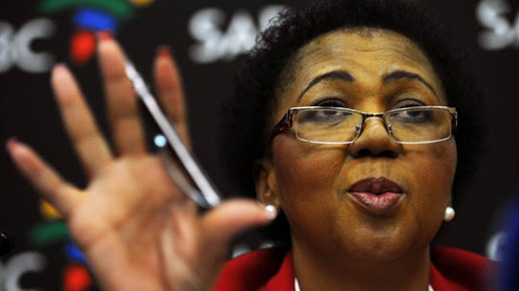
More recently, UNISA confirmed that SABC chairwoman Ellen Tshabalala does not hold either the BComm or postgraduate degree she has claimed to have on her CV. She went as far as to halt a parliamentary inquiry into whether she lied about her qualifications.
As Max van Doren once said “Respect for the truth is an acquired taste’.
This is especially true in a sluggish economy where well-paying jobs are scarce, and people are willing to put their morals aside to get the job and power.
And while the people in public office and parastatals make the headlines, corporate SA and small business are not immune to the threat and business costs of fake degrees.
Traditionally, the authenticity of high-value documents such as degrees, diplomas and certificates were safeguarded by watermarks, seals, embossing and the specific paper the qualification was printed on.

In the digital age, this has all but fallen away. Digital technologies such as scanners, PDF documents, PDF ‘crackers’ and universal fonts make forging documents such as diplomas and certificates as simple as a few clicks of a mouse. Technology is a fraudster’s best friend. But the tables are turning, and new technology can now be used to make tech the fraudster’s worst enemy.
New tech secures the data/information on the paper, not the paper itself as in the past.
The genius of the solution lies in making the information on the document ‘unalterable’. Revolutionary anti-fraud technology, a first in South Africa, creates a digital signature secured in a QR code that is embossed onto a document or encrypted onto a digital platform. The digsigsecures the authenticity of the information by securing the information digitally, thereby protecting the original data and rendering it immune from alteration or forgery. The authenticity of the information can be checked via a mobile app. It is a giant step forward in the fight against counterfeit documents like payslips, proof of payment, proof of accounts, title deeds and academic qualifications.

Imagine how different the worlds of business and Government would be if HR Managers could be secure in the knowledge that they hired the right person for the job with the right qualifications? How much more efficiently things would run?
That companies, parastatals and offices of Government would not have to carry the costs of having someone in a position that they are not qualified for. That a degree or qualification could be trusted at face value since the information/data on the document can be instantly verified via a patent-pending mobile app.

The future of detecting fraud lies not only in being one step ahead of the fraudsters but also finding a balance between the costs of technology and the real cost of fraud.
Even one bad hire can cost a company a significant amount of money, not to mention reputational risk.
Effective solutions need to be cost-effective and simple while intelligent enough to outwit the many fraudsters who are constantly combining brain power and machine intelligence to go on the attack.