The IoT Uprising - How will the Internet of Things Revolutionise the Financial Sector?
by Jonathan Haskins & Daniel Morelis

 |
 |
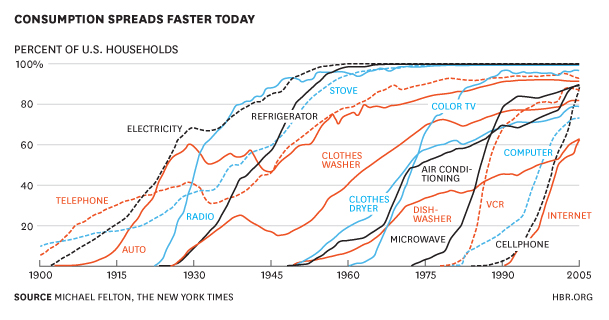
Technology is evolving at a rate that humankind has never seen before. According to studies in the United States, it took 30 years for electricity and 25 years for the telephone to be adopted by 10% of the US population. In comparison, it took less than five years for the same percentage of population to adopt tablet devices. It is a thrilling time to be alive and the ways in which technology can be harnessed to improve our lives, is seemingly endless. It is limited only by the extent of our imaginations – and that might be where the Internet of Things (IOT) takes over.
Since its invention in the 1980’s, the internet has always been an Internet of People. It connected people with people. Whether it was an email, a webpage or a Skype call, people were involved in the transfer of information in some way.
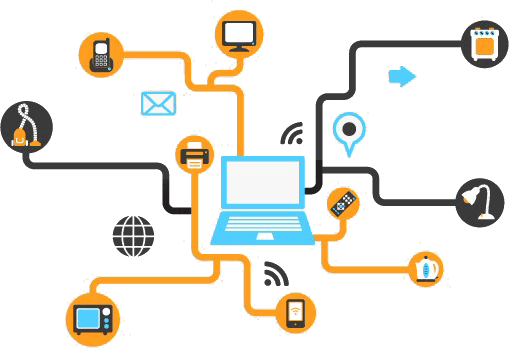
The IOT is a new internet. An internet that connects things with things. Things that have the ability to sense, touch, communicate, collaborate and control. Sounds a bit sci-fi doesn’t it? The reality is that we have been living with the Internet of Things for a while now.
Take your smart phone for example: it knows where you are, it knows how you are holding it, it knows how much light is in the room and it knows what you are saying to it (“Hello Siri”). Pair your smart phone with your Fitbit and suddenly you have network of things that can track how many steps you have taken today, whether you have been to the gym or not, what your heart rate is, and then automatically share that information with your health insurance provider who may reward you with points or discounts automatically calculated and loaded onto a card or account. All without you having to engage with another person at all. That is a simple example of the Internet of Things.
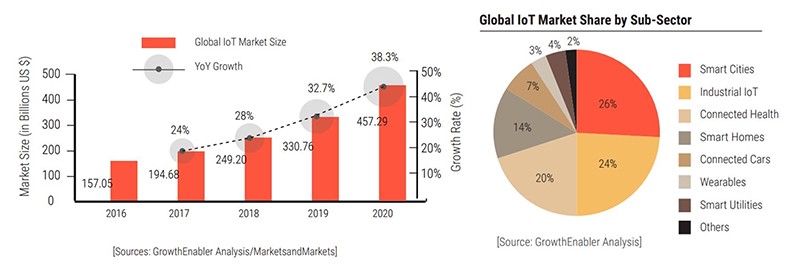
Based on figures from Price Waterhouse Coopers, $6 trillion will be spent on the Internet of Things (IoT) solution industry between 2015 – 2020 and businesses will quadruple its investment in IoT technology to $832 billion in 2020. Consumer spending on IoT is set to increase from $72 billion in 2015 to $236 billion by 2020.
The Internet of Things is big business.
Three markets are currently dominating IoT expenditure globally: smart cities, industrial (manufacturing) and connected health, but smart homes, connected cars and wearables are not far behind.
If my smart phone example sounds a little sci-fi, the following developments in IoT are really going to radically shift your idea of what it possible.
The war on rhino poaching is top of mind for many South Africans and has become a priority for wildlife organisations. Using rangers to track rhinos in vast national parks and game farms is both financially and logistically impossible, but geofencing makes this technologically possible. Geofencing is a virtually defined physical area and through the use of monitoring devices, wildlife protection officers can receive automated alerts (via cell phone, email, SMS) when rhinos are straying into high risk poaching areas. This allows them to quickly deploy the necessary protection resources or move the animals to a different location.
This same geofencing technology is being used in the logistics industry to monitor vehicle usage. Owners can set up geofencing on trucking or delivery paths and will receive real-time alerts if drivers leave their designated routes. It also allows live monitoring of driver speeds, stationery times and much more.
These monitoring applications can be extended to livestock, medicines, food and almost any other asset. Devices report data like temperature, movement, and tilt, which offer key metrics for quality control and traceability.
In 2017, Vox partnered with SqwidNet, a local network provider for IoT devices in South Africa. One of their pilot projects is the monitoring of home geysers for insurance companies. The system has a number of temperature sensors as well as a water supply control and will be able to monitor when warm water is being used, how much is used and most importantly, it has the ability to switch the geyser on and off autonomously based on the family or person’s user profile. No more having to remember to turn the geyser on in time to bath he kids at 6 pm. The technology will also be able to prevent catastrophic accidents like geyser leaks or geyser bursts.
The dairy industry has taken IoT to a whole new level by developing “connected cows”. In the past, farmers have used a type of pedometer to monitor whether a cow is walking too little or too much as this an indicator of its health and whether it is at its peak fertility phase. This hasn’t however provided a solution to massive stock losses that occur due to birth complications when they are calving.
Developers are testing a palm-sized sensor in the animal’s tail that uses tail movements and other data points to alert the farmer to how long the cow has been calving and whether there are any potential birthing problems. This monitoring is even being used to check the cow’s dietary health and temperature from within the rumen (first stomach).
All these incredible IoT applications can make it seem like this technology is hugely expensive and only available to large companies with big budgets. On the contrary, businesses like Vox are already rolling out IoT products for trade and consumers that are affordable, easy to set up and user-friendly. Early adopters can look forward to the benefits that come with increased data monitoring including increased profitability, lower staff costs and improved business management.
What are you waiting for?