
The design of your process and concentrator could be more productive and could generate more profits. The secret to this is understanding the difference between two different technologies: centrifugal vs peristaltic pump technology.
Centrifugal pumps have been around for approximately 300 years, and as a “go-to” solution, are often used in the mining industry in various applications.
Without a full understanding of Peristaltic Pump technology and its capabilities from a mathematical standpoint, it is often not considered in the design phase. Those that do take it into consideration, tend to apply centrifugal principles and design philosophies, often to discover later that the technology doesn't work the way it should. This is where problems arise.
The Math Behind Centrifugal vs Peristaltic

Peristaltic pumps on the other hand, have been around since the late 50s, but only became more widely used in South Africa from about 1985.
Buyers go to market and get prices back offering a view on centrifugal versus peristaltic pumps . Now of course, at face value the centrifugal pump option could be less expensive than the peristaltic pump option. Once one enters into the design phase of the application and discovers what the capabilities are from a mathematical standpoint, that’s when the differences become clear.
We find the difference between the two technologies is the ability to move a larger percentage of refined solids.
Centrifugal pumps are generally limited to between 40-50% solids by volume whereas peristaltic technology has the potential to pump 80% refined solids by volume.
If the application approach focuses on the amount of concentrate/product (“the money side”) to be moved in tons per hour the product’s specific gravity volume and water requirements will be very different. Less water will be required to move more product with a peristaltic pump versus a centrifugal pump in the same amount of time – leading to significant cost savings as well as an increase in production.
The conclusion would be “less water, more product = more profit”
Centrifugal Thinking can Destroy your Peristaltic Pump

Peristaltic pumps provide excellent problem-solving pumping solutions, particularly when the medium being pumped is dense, highly abrasive, corrosive and/or viscous.
A key process design consideration is line velocity and the avoidance of particle settling which is normally a critical consideration in the discharge pipeline design when designing slurry pumping systems using centrifugal pump technology.
In contrast, peristaltic pump system design takes other factors into account when designing a pipeline, particle speed or fluid velocity are of much less importance, system calculations such as discharge pressure, route of pipeline, increased pipe diameter and distance rank higher on the importance scale. The total mathematical calculation to determine the most effective peristaltic pump system design varies vastly from counterpart technology considerations.
The correct peristaltic pump system design should reduce infrastructure cost, and the use of pulsation dampeners in the system will determine the effectiveness of metering and monitoring equipment.
In any design, the total cost of ownership has a long-lasting impact on the choice of technology, given peristaltic pump reliability and ease of maintenance versus centrifugal pumps, both achieve the objective but the centrifugal pump can be more expensive when doing a full Life cycle costing exercise.
The important point to remember is that if we design a peristaltic pumping system but apply a centrifugal pump design theory, this may destroy your peristaltic pump.
Talking Numbers
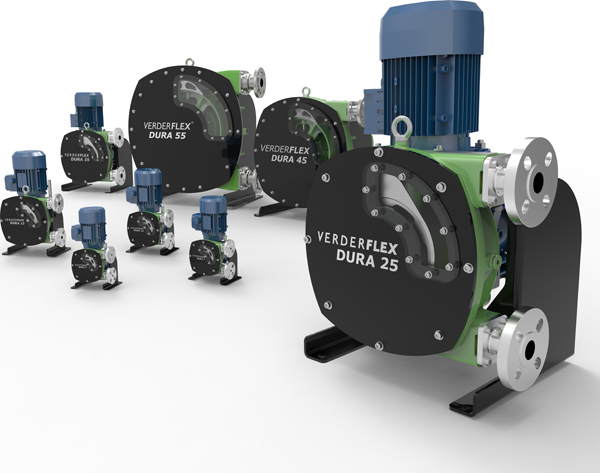
The difference is mathematical, in order to pump an optimal water to solids ratio, the correct system design will point to profitability.
Considering life cycle costing, total cost of ownership versus other technologies combined with less water, less parts, less environmental issues, more product delivered, a more affordable and more efficient process plant is possible.
We certainly can talk numbers.
Less OPEX, less CAPEX with more efficiency – Certainly less is more!
This is all without touching infrastructure and design. Read this article to see these efficiencies in greater detail.


 Powered by Majestic3.com