The pressure is then on - if you are to remain competitive and productive, the installation and maintenance of world-class vacuum pumps, vacuum systems and accessories are requisite. And to make matters worse, you are required to do so at the lowest cost possible.
Something’s got to give in this tug-of-war between quality and cost-saving. Unfortunately, it is often incorrect equipment selection, poor quality of installations and lack of proper filtration that cause the issues. In trying to ensure the highest initial cost savings, the “one size fits all” or “a vacuum pump is a vacuum pump” approach is followed, and the products often don’t last. Taylor made installations are not even considered.
I am stating the obvious here but when a vane a claw or a screw, in a vacuum pump breaks or is jammed up, due to ingestion of water or a foreign particle, the vacuum pump seizes up, anything dependent on that vacuum is in jeopardy. An entire production line may come to a grinding halt. You will agree with me that down-time is expensive in the short term but has even more negative consequences in the long term.
Throughout our 37 years of experience supplying plants and factories across Africa we have seen the tangible effects of insufficient consideration to the initial equipment selection, insufficient planning, improper installation, and lack of maintenance scheduling. We have witnessed many establishments where vacuum pumps are running continuously, using incorrect filtration, or not having any at all, and without taking the actual process into consideration, oftentimes using the wrong vacuum pump entirely! Sometimes only one vacuum pump takes the entire burden - until it self-destructs…
Panic stations ensue when a pump self-destructs! The short-term continuous running of one pump may have saved some initial costs but now you are faced with an even bigger problem - thoughtless short-term cost-savings turn into eventual catastrophe.
Poor maintenance, lack of back-ups and incorrect pipe sizing & layout of piping installations are among the biggest red flags for vacuum pump or system failures. Any one or a combination of these factors wreaks havoc. Not to mention the taxing pressure this asserts on trying to be energy efficient and comply with reduced carbon footprint requirements. I am sure this sounds all too familiar.
So, here are a few tips on how to improve your system & ensure that your vacuum pumps don’t self-destruct:
1. Your Product Quality Might be in Jeopardy
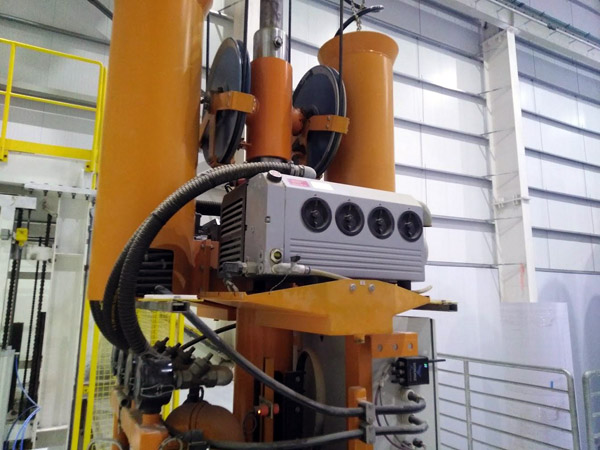
Lack of maintenance causes the pumps to wear out, period. They don’t get repaired and because the process wasn’t subjected to sufficient vacuum for the correct amount of time, product might be damaged or entire batches lost.
This could mean thousands or even hundreds of thousands in profits lost. Too often this is the case, yet regular maintenance is overlooked. Be proactive & plan, consult your vacuum supply company, discuss the vacuum pumps you have, get a hold of the manuals & in consultation with them, set out a detailed maintenance schedule. Get the spare parts kits or individual parts codes from the dealer in advance & order a set of recommended parts kits to hold in stock.
Apart from a lack of maintenance, running your equipment to exhaustion will also have detrimental effects on the product that is being manufactured.
We experienced a company in the soap industry sending out flawed bars not up to standard because they put too much pressure on their older vacuum pumps running non-stop in the degassing process. These pumps were not monitored & were worn out, and it damaged their product reputation which led to costly recalls.
I cannot stress enough how important it is to investigate newer technologies as they can lead to substantial process improvements and save you money as well. One such example is the addition of variable speed drives fitted to the vacuum pumps. It saves time, money and resources down the line and ensures substantial cost savings.
2. Ensure the Right Filtration

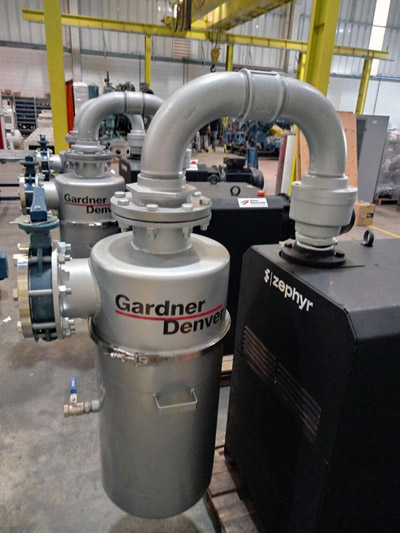
The incorrect or insufficient in-line filtration can have a catastrophic impact on the functionality of your vacuum pump or vacuum system. One must prevent all particles or debris from entering the vacuum pump & wearing it out.
Ingestion of water or vapour will mix with the oil & it will emulsify; the lubrication properties will be broken down & the vacuum pump will no longer be properly lubricated. It will run hotter causing faster wear. Ingestion of particles will cause a grinding paste in the vacuum pump & this will also cause it to fail sooner.
The correct filtration needed for the specific process ensures that debris is properly trapped before entering the vacuum pump. If one has a dusty process such as woodworking, a simple in-line filter housing with a 5-micron filter paper would be sufficient. If the dust particles are finer, one could go down to a 2-micron Polyester filter element but if the particles are still finding their way through, then one should consider an in-line oil bath filter trap. This type of filter has a combination on an oil bath where the particles get trapped by the oil & then a filter portion to catch any airborne particles that have not settled in the oil bath.
Application where there is water or vapour coming down the line from the process would require a simple in-line trap filter, commonly these filters have transparent bowls so that the operator can easily see if anything is being trapped. If this is not sufficient then the remaining options are either a cold trap or an in-line condenser. Cold traps usually require more complex refrigeration systems & condensers would require chilled water from the plant.
3. The Wrong Pump for the Application
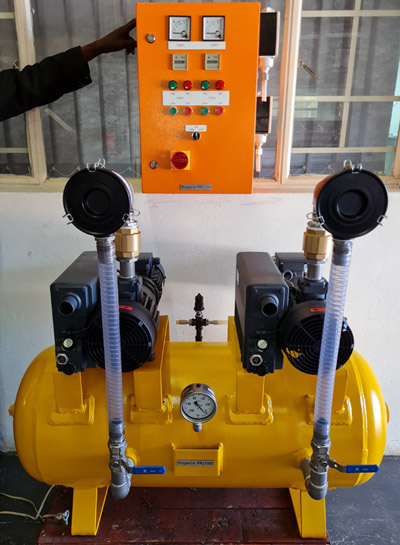
As mentioned before, short-term saving may look attractive at the start of a process but there is no replacement for quality and fit-for-purpose products. Cutting costs initially frequently results in having to fork out triple the outlay, down the line.
You may wonder - should I use a rotary vane, claw, or screw vacuum pump?
Consult with a professional to answer all your questions. They can be instrumental in saving you money & potential losses by assisting you select the correct vacuum pump best suited for your specific application & budget.
Should you not be 100% clear on the exact specifications and applications, talk to us.
Using the incorrect equipment may cause unforeseen issues once your process is up and running. Get the right vacuum pump first time for the application.
4. Energy Efficiency, Energy Efficiency, Energy Efficiency…

Complying with carbon footprint requirements and more effective energy efficient equipment will also be facilitated by following the guidelines as set out above.
Old vacuum pumps waste more energy and cost you time. Newer technologies can increase your efficiency and lower your carbon footprint. Noise levels in newer designs have also been a major factor when designing new models, so they run much quieter, often take up less space & are more efficient. The Earth, your staff, your neighbors & your budget will appreciate this…
I am happy to come and take a look at your current vacuum pump set up or help you investigate new technologies for your current requirements at no cost to you and give you an assessment.


 Powered by Majestic3.com