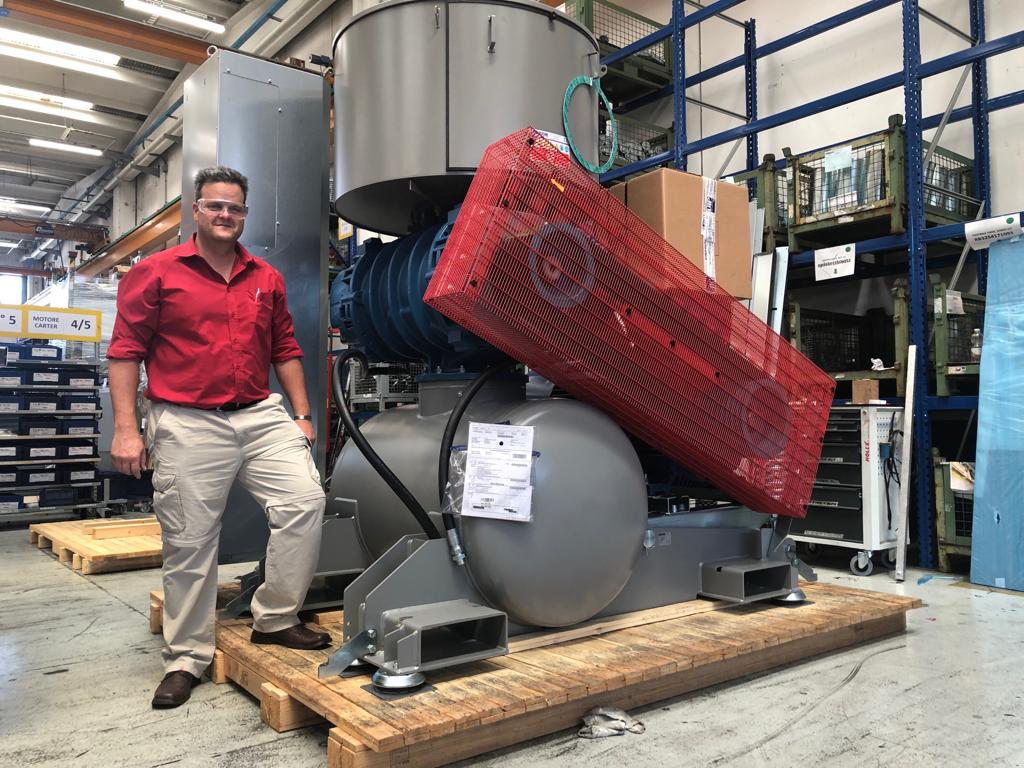
One of the most robust and enduring pieces of mechanical equipment was designed more than a hundred years ago.
The blower’s robust and enduring properties turned out to be its biggest drawback.
Suppliers and sales people quickly realised this and started using it as a selling point.
The following is a very familiar scenario in blower sales. An overconfident salesperson says: You need a blower sir! Let me have a look what I have in stock. We will make it work for you – it is maintenance-free and cannot fail!
He, however, does not ask whether the blower is the correct one for the application and if it will perform up to the expected parameters. He doesn’t consider whether it is too small or too big and slightly out of the required range. The most important thing is that a sale needs to be made - if he does not sell the blower to the customer, they will buy one from another supplier anyway. This often happens at the expense of the client.
Most of the time the blowers are belt-driven and it is easy to increase the speed by selecting a different pulley ratio & maybe the motor. If you want more air or higher pressure, it is as simple as speeding up or slowing down the blower by changing pulleys.
Roots blowers happily run all day every day from 1500 rpm to 5000 rpm if sized correctly, for the correct application and taking into consideration required performance parameters and ambient site conditions.
1. Why is it so important to do a proper selection and make sure the blower is the correct size for the application?
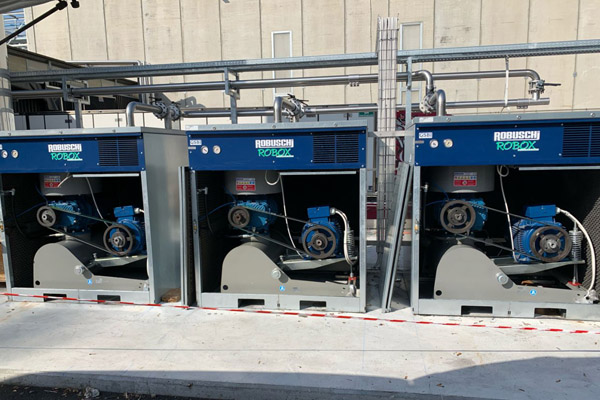
The Roots blower (or rotary lobe blowers) use the air sucked through itself for cooling which aids in keeping them running at acceptable temperatures. When the blower is too big the airflow gets throttled downstream & if the over pressure relieve valve is not large enough or set incorrectly, it causes excessive pressure & heat buildup, leading to damage. When a blower is oversized, there is a massive wastage of energy as the motors would be excessively oversized (and at the cost of electricity these days), this option makes no sense at all.
If the blower is too small one can speed it up to satisfy the process demand, but this will cause an increase in heat generation. This overheating will lead to excessive wear & ultimate premature failure.
2. Blowers are bought, installed and forgotten. “No” maintenance is required. Until they break down.
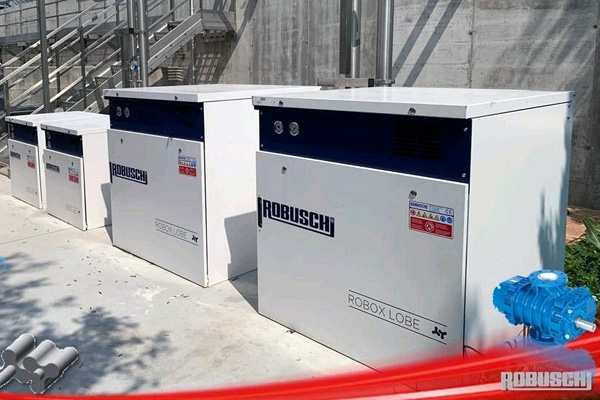
Again, the blower’s robust and enduring properties turn out to be its biggest drawback.
Let’s look at the simple but effective design of the Roots blower to determine what needs to be serviced.
Lubrication - The blower has a splash plate mounted on the shaft to splash lubricate the bearings and gears which are located on the drive-side and gear-side of the blower.
Cooling – The airflow through the blower keeps the blower at an acceptable temperature.
Protection against foreign objects – An intake filter prevents dust and any foreign object from entering the blower.
As Roots blowers do not demand a tight service schedule, they are forgotten and run until the filters are blocked causing overheating that can lead to failure, or the oil turns to “toffee” and the bearings seize. Downstream blockages and restrictions can cause overheating.
3. That dreaded phone call: your plant has gone down
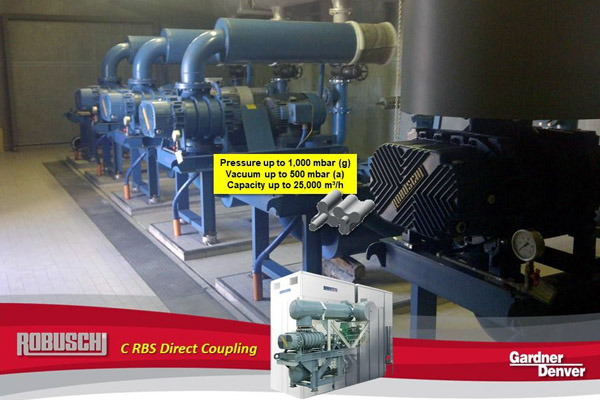
Is there anything worse than hearing that news? The increase in the pressure on everyone involved is immediate. Your staff running the plant as well as the service providers you rely on to get the plant up and running will feel that gut punch. And it is not a pleasant feeling, especially at 3 am!
The cost of unexpected downtime can be catastrophic and let's be honest, in this VUCA world who can afford to have that kind of loss, especially when it could have been avoided? Not only is there production loss but also the additional cost implications of the time, equipment, expertise, and processes required to get the plant running again.
And of course, these things always seem to happen after hours, increasing the costs even more.
Chasing multiple service providers with individual areas of expertise simply extends the time and cost of downtime. Wouldn’t it be ideal to have the solution available at the end of one call – whether it is the repair or the replacement of the blower? Everyone would certainly sleep better knowing that the solution is just one call away, should anything happen.
4. Prevention is better than cure.

The most common reason for a disruption in the working of a blower is a simple lack of maintenance. The first step to preventing this is to develop and implement a well-structured maintenance schedule. Scheduling downtime for maintenance is cheaper and more reliable than the potentially disastrous unexpected plant shutdowns that result from blower failure.
Unexpected equipment-based losses are always going to be worse than those experienced during downtime scheduled for maintenance.
Proactive maintenance and repairs are preferable and more cost-effective than reactive actions. It also means that any parts required can be ordered through the usual channels rather than using emergency immediate delivery with all the associated additional costs.
5. Penny wise pound foolish

Having a standby blower available makes sense, however organizations see this as unnecessary and would rather take the risk of losing production while running around looking for a suitable replacement blower. If you add it all up, keeping a stand-by on hand will be a lot cheaper than costly production losses.
Most equipment suppliers offer organizations various options when it comes to service level agreements. For some reason they are often reluctant to see the value that a SLA can bring to the table.
6. The weakest link in the system

One weak link in the system puts strain on all the components. If an installed blower seems inadequate, organizations often assume what is required is an additional and/or larger blower. This often is not the case. Instead, the rest of the system may not be adequate or inappropriately designed.
Another factor to consider is worn out, eroded piping which can be an unexpected expense for an organization and is entirely avoidable if the system within which the blower is to operate is considered at the time of purchase.
Correct sizing and proper maintenance will keep your blowers running happily for years to come.
Why not chat to me about your requirements or let me come & do a free site inspection of your existing blowers.



 Powered by Majestic3.com