Bulk Email in Holland:
The Cloud Act poses a SERIOUS Risk and SERIOUS Accountability for CIO/CTO/CMO.
Bulk Email Companies Weathering the Cloud Act Storm may be Compromising their Client Privacy?
by Bram Smits


 |
| Bram Smits |
As CEO of Tripolis Solutions BV, Bram Smits is a focused and influential executive leader with a proven record of exceeding profitability goals, turning around underperforming units and driving increased revenues and market share. With a distinguished 20+ year career providing visionary leadership for global operational, sales, marketing, and business development initiatives, he has executed the following roles and responsibilities:
Did you know that all data held by US companies like Apple, Microsoft and Facebook must be made available to the US government on demand, even if that data resides in the E.U?
Companies offering Bulk Email services in Holland may have to adhere to US data legislation if the companies hosting their data are US-based, even if that data is hosted in the EU. Privacy Laws affect data in different ways depending on where a company is based and where the data is stored. Many Europeans believe that EU GDPR legislation (General Data Protection Regulation) is all that we have to contend with, but the US has also snuck in a new law (The Cloud Act), conflicting with the GDPR, which could dramatically change who has access to data and how much privacy your clients are entitled to. This can be explained in a simple timeline.
Deadline given by the European Parliament for The US government to make alterations to The Cloud Act to be more accommodating of the GDPR principles.
 Some argue that the Cloud Act came into being for a good reason, because of a drug-trafficking incident that occurred in Dublin. The US government wanted access to incriminating data from Microsoft hosted remotely in Dublin, but Microsoft was unwilling to hand over this data due to privacy considerations. The Cloud Act was brought into effect so that the US government would be able to access any data stored by a US-based company, without a warrant, even if that data is stored in the EU. On first glance, this may not seem ominous, but it has been flagged by the ACLU as a “sinister piece of legislation” and has also been opposed by Amnesty International and The Human Rights Watch.
In order to be able to send customers (or potential customers) bulk emails, a certain amount of data about these individuals needs to be safeguarded. However, if the company responsible for storing your data is US-based, the US can gain access to this private data indiscriminately. This can be very disconcerting news for your customers.
 The current US government is no longer known for its sensitivity and diplomacy when dealing with other countries. In fact, a brash and bullying modus operandi is quickly becoming synonymous with the leadership of the US. They can no longer be trusted to treat others with consideration and discretion, especially when it comes to private information. According to The Cloud Act, the US can gain access to any data stored by a US-based organisation, even if that data belongs to a European citizen. It’s a free-for-all if the company is a US company and there is very little reciprocity from the US side. In fact, the Cloud Act seems to have come into existence without any considerations for the GDPR law at all. Another disturbing consideration is that the US is also at liberty to share the data it collects with any other country that it sees fit. There is no limit to what the US government can choose to do with your data if it has access to it. Who stores your client data and where are they based?
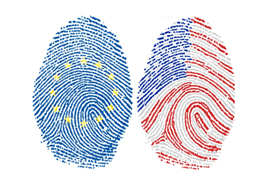 Personal data can include your name, your address, gender, financial details and other sensitive information. Who would your customers hold accountable if their private data was suddenly made available to other parties from other countries, without their permission? Remember, EU-based data storage companies adhere to GDPR legislation, which safeguards the privacy and rights of EU citizens, whereas the US Cloud Act allows the US government to access any data at will. Would you want the US government to have easy access to all your private information for any reason? Do you trust that this personal data will always be used for the greater good? Or, would you prefer to make use of the services provided by businesses that adhere to GDPR laws, legislation that protect privacy rather than compromise it. EU-based data storage companies do not have to comply with the Cloud Act.
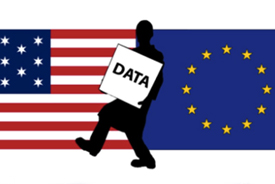 By necessity, bulk email companies harvest a considerable amount of personal data about their customers. Under the GDPR legislation, this data is safe because the privacy and rights of each customer is ensured under the privacy law. Personal details cannot be shared with other parties and emails can only be sent to customers that have consented to marketing or transactional emails. EU companies must comply with GDPR privacy laws. Many believe that the US Cloud Act may be seen as a human rights infringement. The following analogy explains the severity of the access that the US government has under the Cloud Act: Imagine that a crime has taken place in a large suburb that you reside in. A suspected crime is believed to have taken place in your suburb, and now the police have access to search every home in this suburb indiscriminately, without a warrant. Not only can they search all the homes, including yours, without permission, they can also keep any and all information they may gather about you and your home on record. Many believe that this is the equivalent liberty that the US government has taken with personal data being housed by US-based companies.
Do you currently use a bulk email provider outside of Holland?
 Powered by Majestic3.com