Food Companies
You Have Too Many Staff and They Are Wrecking Your Efficiency
by Roger Graham

 |
When you’re heading up operations in an organization it’s safe to assume your main goal would be to improve operational efficiency, delivering your products or services to your customers in the most cost-effective manner possible while maintaining a high quality.
In manufacturing if you’re experiencing a strain on labor resources during a big order or stock count, your reaction might be to hire more staff on the floor. While this might seem like the right solution, a lack of knowledge around your staff could be costing you more money than you think.
Look at it this way: your biggest expense is likely your staff. A primary goal within manufacturing optimization should be to keep your labor headcount as low as possible, so when challenges are addressed by adding more staff in hopes of resolving an issue quickly, you may actually be making the problem worse. Rather than putting a band-aid over it, improving the efficiency is a more effective way to address these challenges and help keep down labor costs.
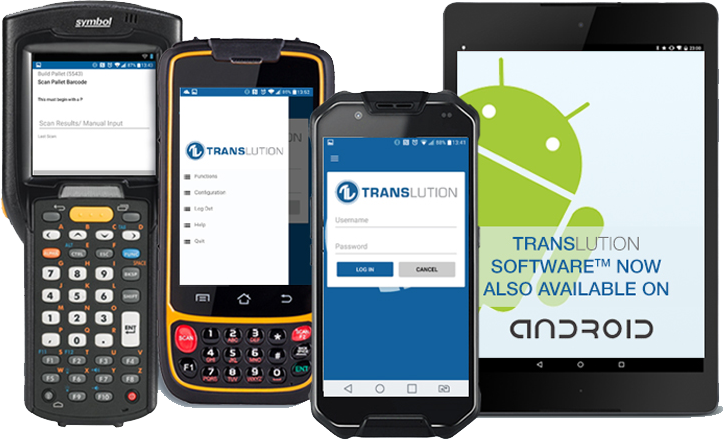
Although the software we created at TransLutionTM Software was designed to collect, manage and automate data across manufacturing, warehousing and other organizations, it also allows you to track the actual time taken to complete tasks by logging every step the employee takes, recording productive and non-productive time and maintenance for each individual user.
This not only provides an accurate overview of what your workforce is doing at all times, but also allows easy identification of inefficient workers that may need more training or who are spending too much time on other tasks.
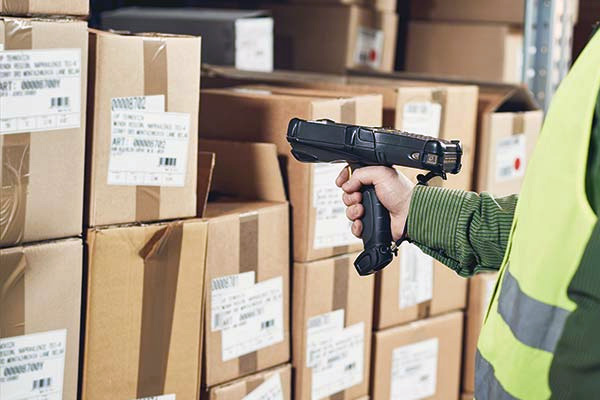
However, when it comes to optimizing labor, automating processes is not just about tracking time spent by staff. Automation also ensures that your staff works at optimal efficiency while reducing unnecessary errors wherever possible.
Implementing the right software, such as TransLutionTM, at key points in your organization’s procedures will help capture and automatically process business data. Whether you’re managing sales orders or running an inventory check, it integrates seamlessly with internal business systems, such as ERP, stock control and other third party software, managing the flow of data across the supply chain.
Staff are instructed what to do and when via their device. In some cases they are even told what path to take through the factory to best achieve their tasks. This means staff training is simplified, making casual labor easy to bring onboard when you need to.
One of our clients operates a distribution centre who processes about 250 orders on average per day when we started working with his company. Their same-day order fulfilment went from 40% to over 99% after implementing our system. At the time, 24 warehouse workers completed daily shipping tasks, and without a change in order numbers, only 13 workers are required today. The same orders for half the cost, half the staff on the floor working faster, with a strong ROI in less than a year.
They didn’t only improve labor efficiency. Using TransLutionTM, they improved operational efficiency in multiple areas of the business.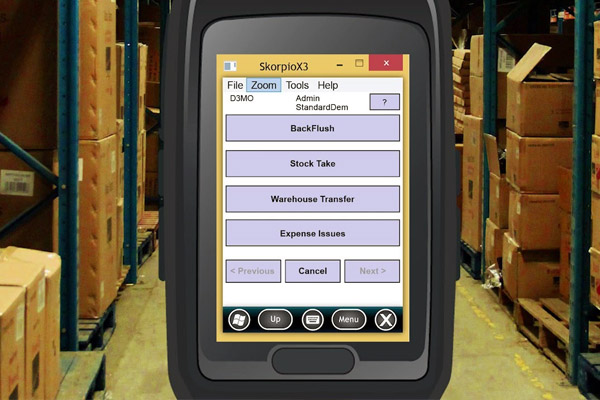
Real time stock accuracies are crucial to fulfil customer demand. In the case of food services, products are manufactured and distributed at great speed due to the freshness requirement, so you need to have a proper understanding of how much stock is available and the freshness of each batch. There may be enough units on the shelf to fulfil an urgent order, but what if they all expire the following day?

Tracking inventory using a full stock-take has unfortunately been a necessary and often expensive undertaking for any business. Before our client started using TransLutionTM, they had brought in a company to conduct a stock-take that shut his entire business down for two weeks, so that each individual item could be physically counted. By the end of it they didn’t even have an accurate count. It is also extremely easy to make mistakes when conducting a stock-take, either in the physical count or an error in the system which has been carried forward with each stock-take.
Many warehousing and manufacturing processes are shut down for the duration of the stock-take because any extra items coming in or going out can alter the count and result in errors. Just imagine the financial loss for both the down time and staff time to conduct the count manually.
A cycle count, on the other hand, allows you to count a small portion of your warehouse each day. During the course of a year, every bin has been counted at least once and fast moving items more than once. As each bin is counted, its contents is compared with the ERP and marked as needing attention only if there is a variance. This means that normal operations continue as counting occurs and there is no need to stop your business processing for days or even weeks while doing an end-to-end stock take.
TransLutionTM can track your stock in real time, eliminating the need for massive shutdowns and increasing your stock accuracy. However, data accuracy using TransLutionTM isn’t only limited to stock.
Operational efficiency means delivering products to your customers in the most cost-effective manner possible while maintaining a high standard. But without optimizing the capture and accuracy of your business data, you can’t possibly hope to achieve an efficient system.
Consider data accuracy when your operation uses a system like Excel to track everything.
Measuring manufacturing tasks is extremely challenging and usually involves several systems, clipboards and resources to input a lot of data into an ERP system. You’re relying on someone to manually input that data correctly, using formulas that may even be faulty, and there is no real-time agility when you consider the fast turn-over of certain food products and their shelf life. There are just too many variables leaving your company vulnerable.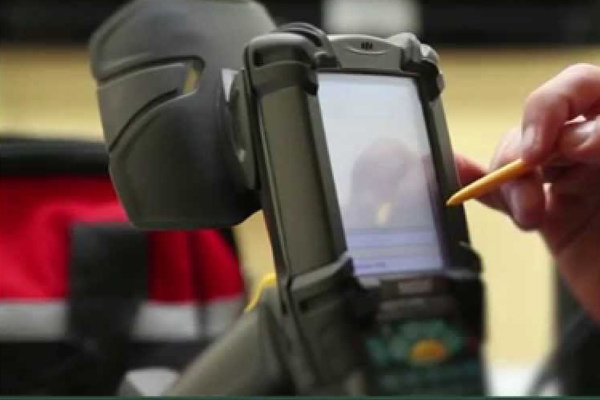
Many technologies out there promise to improve operational efficiency, production planning and processes, while offering real-time results, but they have not considered the problem of inputting data into the tracking and ERP systems. With so much being said about operational efficiency, the biggest challenge with all of these is accurate measures – you simply can’t improve what you can’t measure.
A warehouse and manufacturing management system like TransLutionTM will help simplify the gathering of information as and when it happens during business processes, and updates the data automatically to the ERP system. Behind the scenes, using barcode scanners and touch screen devices, every movement of materials and labor can be tracked throughout the entire process. Once this data is available, improving operational efficiency is the next logical step.
This begs the question: right now, how quickly can you address issues with the confidence of accurate data? It is in your best interest to ensure issues can be addressed as they happen. Imagine still thumbing through printed pages in a digital age during an emergency.
When our client implemented our system, one of the most interesting by-products was the effect on in-bound customer support calls. By fulfilling their on-time delivery target up to 99%, customers no longer had the need to call and ask where their orders were, and inbound call volume dropped by 1/3. In fact, they had a penalty system in place where if they fail to deliver on time, they must give the customer a partial credit. Those credits are no longer significant.
One of our customers even implemented a rule that if the order hits their website by the close of business, they will ship the necessary part that evening in order to fulfil the order the following day.
Order fulfilment is all about meeting customer expectations, and it’s hard to do that if you are out of stock on the items customers want. Knowing what’s in stock and being able to provide visibility on stock levels as the order is placed prevents customers from being disappointed with backorders and delays.

One of the most terrifying realities of a food service professional is a total recall. Just recently the United States Department of Agriculture's Food Safety and Inspection Service (FSIS) announced US Foods had to urgently remove over 700 pounds of raw beef and pork from shelves due to blood contamination. By the time they realized the problem they had already shipped out to restaurants in Alabama, Georgia, Mississippi, and Tennessee.
The reality is, there are huge safety and financial issues related to food manufacturing - it’s taken for granted by the public that food is safe.
If that happened to you, where would you even start? How many products were affected? What stores were they in? A system like TransLutionTM tracks every step in the production and manufacturing process and knows exactly what ingredients, parts or products where used in which batch and where it was manufactured. In fact, if you enlisted TransLutionTM, we can track every raw material or ingredient from farm to shelf, enabling traceability and avoiding the dreaded total product recall when one or more ingredients may be called into question.
As a service, TransLutionTM collects, manages and automates your data, but in actual fact we’re all about improving operational efficiencies and saving costs as a result of those efficiencies. As a client you have an intuitive understanding - where we come in is to help offer documented statistical understanding and setting your business up for optimal efficiency. Powered by Majestic3.com