Residential Estate Security
A Drastic Restructuring
by Glenn van der Westhuizen

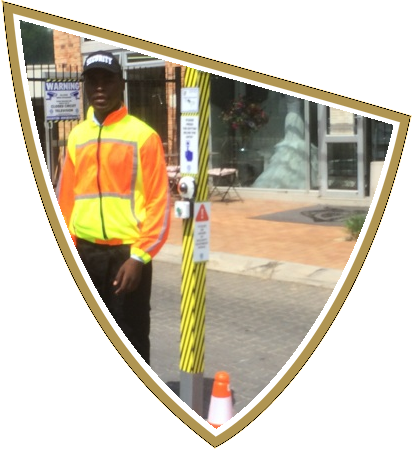
 |
Glenn van der Westhuizen is a security specialist with vast experience in all aspects of security including the guarding of estates. He is also the founder and CEO of the 360 Degree Group of Companies, a security equipment vendor and provider of security services through a network of franchisees.
People who know Glenn well are convinced that security is written into his genetic make-up. After joining the SANDF and receiving basic military training. He was fortunate to be in a unit that allowed him access to advanced training in just about all aspects of security imaginable.
His military background set the stage for starting his own business in the of training new entrants into South Africa’s security sector. Glenn’s second interest lies in the development of software programs. Putting his two main interests together, he started developing software programs for the technology-driven guarding sector. The 360 Degree Group was formed and the rest is history, as they say...

Crime is a veritable growth industry in South Africa and escalating unemployment rates suggest that this trend will continue for the foreseeable future. Because South Africans have come to accept that, they purchase homes in lifestyle estates and place their businesses into commercial parks. In both instances, they rely on estate management to keep them safe and secure. This notwithstanding, resistance against security measures that are perceived as being invasive is on the rise. The implementation of the Protection of Personal Information Act (POPI) adds further complexities to the estate manager’s task. To find out more about POPI, click here.
In this article, security expert Glenn van der Westhuizen examines the facts and offers an all-encompassing yet affordable solution.
People purchase homes in security estates and are willing to pay high levies because they expect this to offer them a more relaxed lifestyle. Not surprisingly, safety and security play an important part. For much the same reason, businesses operate from business parks. Both groupings accept higher property prices, levies and/or operating costs in exchange for perceived safety and security.

For the estate manager, this creates a conundrum of gigantic proportions. On the one hand, the relationship between safety and security is such that a weakness in security creates increased risk and decreases safety. This would point towards the need for tight access control but this is easier said than done.
On the one hand, traditional forms of access control tend to slow down access, annoy visitors and are hardly effective.
On the other hand, most individuals are aware of horror stories relating to identity theft made possible by the leaking of personal information. This makes them reluctant to part with sensitive information like their ID number, cell number or email address.
Sound security practices demand that access to security estates is controlled. This requires formal access control but ideally, the process should:
The POPI Act
As its name suggests, The Protection of Personal Information Act, often referred to as POPI (Act) is intended to safeguard sensitive personal information (information) from prying eyes and prevent its subsequent misuse. It protects an individual's right to privacy regarding their information which may have been collected by a third party during, for example, a normal transaction like on entering a security estate.
Traditional access control processes fail the above test on all counts because they rely on paper-based systems or simple access tags.
Residents are provided with a card or button that allows them access to the estate. That’s convenient, but is it really secure? The answer must be a resounding ‘no’ because cards or buttons can be lost or stolen, or an ex-employee can retain one. They can be used by unauthorised individuals to gain access to the estate.

For far too long, visitors have been asked to complete an access control register. There was some resistance but most willingly provided sensitive information. Did this really enhance estate security?
Once again, the answer must be a resounding ‘no’. Consider the following:
The inescapable conclusion is that the traditional visitor register has had its day and needs to go. It is, after all:
And that’s not all. The visitor register does not necessarily provide the type of information required should an incident occur.
Contact us at Workforce Management Solutions and we’ll set up an obligation-free consultation at a time convenient to you.
 Powered by Majestic3.com