Waste management compliance
by Author Name

 |
| Author Name |
Lorem ipsum dolor sit amet, consectetur adipiscing elit. Integer nec odio. Praesent libero. Sed cursus ante dapibus diam. Sed nisi. Nulla quis sem at nibh elementum imperdiet. Duis sagittis ipsum. Praesent mauris. Fusce nec tellus sed augue semper porta. Mauris massa. Vestibulum lacinia arcu eget nulla. Class aptent taciti sociosqu ad litora torquent per conubia nostra, per inceptos himenaeos.
South Africa is responsible for over 108 million tons of waste every year. Of that waste, 90 per cent winds up in landfills across the country while a measly 10 per cent gets recycled. It’s no wonder then that in 2013 the Department of Environmental Affairs took serious steps towards waste management compliance. By instating an Act which declared all companies must apply to the Department of Environmental Affairs to be registered on the South African Waste Information System (SAWIS), it was clear no business would be able to slide by unnoticed any longer. Compliance is being monitored and non-compliant companies are being prosecuted. Failing to comply with the national waste information regulations would now be liable to a hefty fine, jail time up to 15 years, or both.
Naturally, this is especially real for those companies higher up in the food chain who will be more under pressure to ensure they are adhering to environmental standards and reporting. This is how my partners and I came to develop an innovative and complete on-site waste management program with the intent to help ensure blue-chip companies, supergroups and the like that come to us are complying with the new waste disposal laws and government regulations.
This is where your SHEQ (Safety, Health, Environmental, Quality) Manager/Officer comes into play, these can also be Operation or Facility Managers for a company. The function of this individual is to assist the company in complying with current health and safety legislation and regulations, with the objective of ensuring all reasonable and proper measures are taken to protect the safety and health of staff, subcontractors and visitors. Adding to that, it’s not uncommon for the heads of these companies to view waste management as a grudge spend that comes with a lot of additional worry outside of his normal function. Partnering with the right waste management experts is the next step and a big way to alleviate pressure on many levels and allow the companies to get on with business.

Every company consumes waste at different levels and as such the options available to efficiently manage their waste should be adapted to suit their needs as well as their pockets.
Your traditional waste removers will be logistics operators, they’re going to arrive with trucks, trailers, skips and compactors. They’re going to collect from the sites and move it to the landfill. But why do these companies move it to the landfills? Because in most cases they own the landfill sites. We stay as far away from the landfills as possible. Instead of having this whole production come through your premises, there’s a less chaotic and systematic approach one can take. With a clear focus on separation at source, we man manage the site and bring in reputable waste management partners to take out the waste items as and when needed. More importantly, the commodity gets divided into its separated form, such as plastic, paper, cardboard, florescent tubes, hazardous waste, batteries and everything in between. It then gets moved onto a partner that will best benefit that particular commodity, whereas the landfills and skips route often promises a separation, which seldom happens. From an environmental standpoint, of course this has its benefits, but plainly speaking this separation of commodities has a higher rebate for customers too. The income generated from the waste in many cases pays for the facility.
Pandae can either put our trained sorters on-site or we can train your staff to effectively identify and sort into the various waste streams, with a monthly management fee that can be offset against rebates received for your waste streams.
When a company’s waste management is under pressure to divide correctly, this makes all the difference.

Traditionally, your run of the mill collection leaves the client with a lot of unnecessary fuss and admin to manage. With Pandae we offer a unique solution. As a collection takes place, we go out and make sure collection notes, weighbridge certificates and safe disposal certificates manifest and are all culminated into an online portal that is easy to view and make sense of and viewable in virtually no time at all. Our process takes the collection holistically and covers it start to finish, keeping the customer legal, ISO complaint, his governance in check and of course efficient from a recording and reporting side, especially considering there may be collections from multiple sites. If an audit ever needs to take place, this will be your saving grace.

Monthly reports are sent out to the client which covers everything that took place over the course of that particular month from start to finish. Reporting on the waste streams the customer has and then make sure the paperwork matches up. Here we are able to assess how much money they earned per kilogram for the collection.
Certainly, in the case of listed companies, they are beholden to these compliance laws and report on their full outlines on environmental as a key focus point, their international counterparts even more aware of environmental compliance.
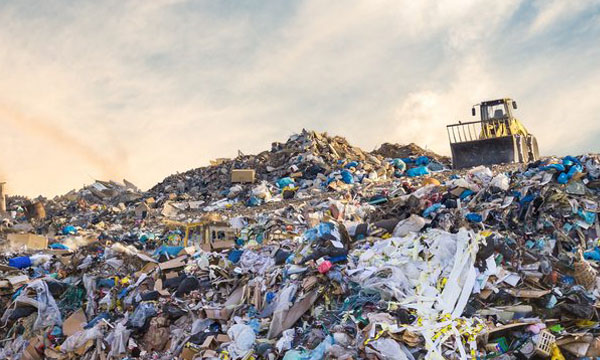
We are under pressure as a country due to the amount of landfill space we have left. The government has made it very clear they will not be opening any more landfill sites, so the focus has shifted to households and companies to ensure that recycling is being done to the best of its ability.
For those who are still making use of existing landfills, of course this means supply and demand is affecting the cost of access in conjunction with the fact that we are in an important phase of diverting. We need to spend money internally at customer, separation, and source level so that the landfill becomes the last resort.
When will this landfill shut down occur though? Although originally aimed at 2020, we are looking closer to 2024 before landfills are a thing of the past and time is certainly running out for companies to get it together.
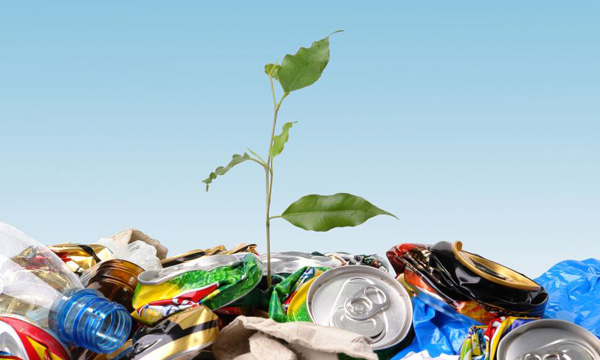
Truthfully, this is more than an Act companies need to follow, for me it runs a lot deeper. I am a family man, so beyond a compliance issue, it’s an ethical issue and it’s going to affect our children. If we don’t fix the waste issue in our oceans, the gases, the tremendous landfill waste, what world are we leaving them? This talks to us as individuals, as a nation, a continent and ultimately as human beings.
In Sweden, did you know they recycle nearly 100 per cent of their household waste? Because they have effectively eradicated a massive problem, they even have to import waste to turn waste into energy (almost 3 million tonnes of waste imported in 2014!). This is an extraordinary feat to have created a recycling revolution. Now if only the world followed. In my opinion, this is precisely what we should be striving towards.
In Johannesburg we only have five or six years left of landfill space before the government shuts them all down. Not only will they become increasingly expensive, but no new ones will be opened. How are you ensuring your company is staying compliant and ethical? Click here to find out more.
 Powered by Majestic3.com