
Welcome to construction hell! Architects and engineers are working blind, with frustratingly low efficiency, and there's little or no information sharing.
Construction is arguably the most wasteful industry in the world and it's clear why. It's a low trust, highly competitive industry, and holding information and IP close to your chest and lack of communication is at the root of the industry's downfall.
It's only a matter of time before Building Information Modeling (BIM) becomes part of the furniture, so now is the time to up-skill, and up-weigh the importance of information sharing on construction projects.
Our experience with the industry since 1999 has exposed us to every facet of the industry. There probably isn't a commercial project in Gauteng that one of our clients haven't been involved with. We see the future of the industry and the future is driven around efficiency: efficiency of processes, decisions, communication and design.
This is why we need a BIM standard and one is coming.
If you're using a drawing board, then go back to the drawing board
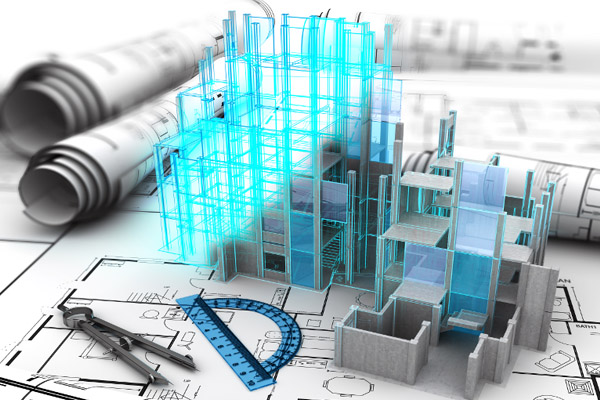
Traditional drawing-based methods are no longer adequate. In fact, reliance on 2D drawings is a hindrance to the building and efficiency process.
As separate teams work together it’s not easy to deliver when they are based in different locations, delivering on different scopes of work, and relying on drawings to navigate the process. Coordinating project milestones, juggling data handover and contract requirements can lead to significant challenges.
Bad information and data silos across companies lead to the massive waste in the industry. In addition, distributed teams are hurt by delays in communications and waste time searching for the right project information.
Reliance on drawings means that every single time a handover occurs between teams, or across phases, a data loss occurs leading to inefficiency, risk and increased costs.
The future is digital collaboration and knowledge sharing that drives efficiency.
You think you can, but simply you cannot buy BIM!.

BIM is more than technology for architects and engineers to use in their designs and during stages of the building operation. BIM is more than just software that you purchase. It is a process to deliver better collaboration and enhanced communication that allows for data continuity to stop delays and reduce waste.
Better project coordination and collaboration with stakeholders, efficient workflows, 3D visualisations, and the resulting improved project outcomes are just some of the benefits of using BIM processes.
BIM processes are designed to help industry professionals move towards more collaborative, automated and more successful ways of working. This is not something that you can just buy – it's about embracing the power behind BIM technology and using it to its full capacity to drive your business forward.
You are using a fraction of the power of your design and collaboration software

Andy MacPhillimy from Morris Architects said, “Tools matter … it takes the right tools to capture feedback, to effectively visualise solutions, and to discipline decision-making and empower today’s highly collaborative project teams to successful project outcomes.”
Make sure you are utilising as much of the technology you have on hand so that you have the best tools available. So often, architects and engineers receive a suite of software and only a small portion of these features are used.
With international companies expanding into Africa, it is essential that we meet the standards expected by property developers. Now is the time to upskill yourself on the different aspects of the software you have available so that when a BIM framework becomes the norm, you remain relevant and competitive.
You need to ensure you are able to use the right tool, at the right time, to get the best results for your clients.
Repetitive tasks must be automated

There's no doubt about it… saving time will make you more competitive. Automating your everyday tasks will create huge time savings and set you apart from the rest of the industry players.
That's why automating repetitive tasks is essential for you to stay relevant and ahead of the game. Why spend days or weeks on drawings, for example, when automation could reduce your output of a superior design to one day or less?
Repetitive tasks such as adding revisions, setting up projects, and renumbering can simply be inputted into your software to create efficiencies that will save you time and money. This way you can spend your time making better design decisions, improve building performance, and collaborate more effectively throughout the project lifecycle.
Automation will make you faster in repetitive tasks and ensure you avoid the human errors that so often creep in with manual processes.
Generative Design is NOT a threat... it's an opportunity

Kean Walmsley and Lorenzo Villaggi from Autodesk define generative design as a "framework for combining digital computation and human creativity to achieve results that would not otherwise be possible. It involves the integration of a rule-based geometric system, a series of measurable goals, and a system for automatically generating, evaluating, and evolving a very large number of design options."
In a nutshell, generative design can take what you are trying to create and automatically generate multiple options for you to consider.
It's natural to think that automation of processes we used to do manually in the past will mean there is a potential for job losses. There's the fear that automating will mean the job you're doing will become irrelevant.
This is absolutely not the case. Although generative design gives you multiple options, you are still at the helm of the decision-making process and can consider far more options than you would be able to manually. It's an opportunity for you to deliver far more than you could in the past.
We believe that generative design will be a game changer for those who get onto it first.
Can you afford to stay behind while the industry moves forward and demands new standards from us?



 Powered by Majestic3.com