If cash is king, who killed the king of agriculture?
by Michael Barber

 |
| Michael Barber |
I have worked within a commercial, sales, marketing and international trade finance function for most of my professional life, mostly within Africa and the Middle East.
Key to functioning effectively is my ability to clearly articulate a company’s value proposition and differentiation in a market or region, and to align this with targeted customers in these markets across all areas of the value chain. Using principles and values such as respect, participative management and authentic leadership, enabled me to deliver to growth targets over decades within the logistics industry.
Most of my career has been served within 3 global logistics companies. My responsibilities evolved from one country to regional level – mostly Africa and the Middle East.
My love for strategic and tactical thinking aligned with financial objectives at both a macro, micro, regional and country level has enabled me to fulfil my responsibilities very successfully.
My international experience and exposure has enabled me to understand and work with all cultures and religions and to factor this into competitive solutions in a multitude of environments/markets/industries across all continents.
My ultimate strength as a professional is I grow businesses irrespective of geography or what market segment they operate in.

Most businesses have seasonal peaks and troughs, and it’s no different within the agricultural sector, whether you are a farmer, a seed supplier or an equipment supplier.
Farming as an example, often has working capital challenges when input costs for the new planting season is required whilst payment for previous harvests have not been received yet. The challenges are the same across the supply and value chain. Cash is king, and for some it appears the king is dead….so who killed the king of agriculture?
Funny you should ask. Banks are the traditional source of funding for businesses, but they have increasing constraints and tend to be risk-averse. They might want to lend you the money, but you will have to jump through loops or at least have a back-stop with unencumbered assets. It also takes time.
There’s an old cliché that says: “Banks will give you an umbrella when the sun shines but take it away when it rains.”

Here’s an actual case in point: a nut exporters peak season lasts from end of May to November, when his cash needs are greatest. As a start-up business he needs cash for infrastructure (buildings, machinery, utilities etc.) health and safety, quality certification, staff (administration and production) transport and many more.
His funding needs are provided either through his own capital or secured capital through institutions like a bank. Once these facilities are maximised or drained, he has very few sources to turn to should further working capital be required (paying a farmer for delivering a crop). The exporter needs a quick cash injection to execute his transaction of a few million rand. His profit margin on these nuts are healthy and he has international customers, this injection would take his relatively small business to the next level.
The nut exporter’s dilemma: unable to secure funding from his traditional funders, he would have to walk away from orders that are as good as cash in the bank. What does he do?
It didn’t take long for an enterprising logistics partner to identify the problem and come up with an elegant solution.
Traditional financing solutions include major crop funding (maize) and other forms of trade finance. But small businesses have limited access to this type of funding due to their usually under-capitalised and already over-geared balance sheets.
Alternative funding of this type does not have to rely on your balance sheet only. A sales contract and access to the supply chain can be good enough. Export contracts of this nature tend to be payable on presentation of bills of lading at port of loading, ensuring a short cash conversion cycle and quick liquidation of the outstanding debt.
The exporter is happy, the logistics partner is happy and the customer is happy.

Here’s the problem that faces not just the nut exporter, but any growing business: cash is often in shortest supply during the peak season, which means businesses are unable to fulfil orders that could substantially grow their revenue and profits. That keeps them small and trapped at the lower end of the food chain.
Where there’s a problem, the market always presents a solution. In this case, the solution has arrived in the form of alternative funding mechanisms that by-pass the banks and provide short-term funding to help businesses realise their full growth potential.
Surprisingly, this alternative funding comes not from the financial sector, but more and more from alternative funders like logistics firms. Perhaps this is not so surprising when you consider that your logistics contractor has far better insight into the character and needs of your business than does your bank. Your logistics operator has a far better idea of your stock turn ratios and inventory holdings than does your bank.
Not all logistics operators offer this service, but it is a trend you should pay attention to. This is part of a far broader trend towards “alternative funding” or speciality funding.
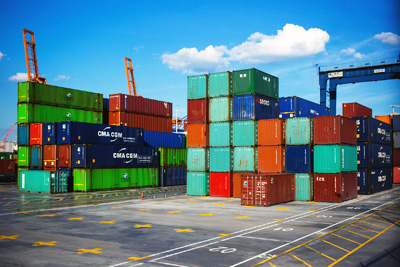
What about imports? South Africa is a major importer of all products, and the agri equipment sector is no different. Like the nut exporter – the importer can also have seasonal cash demands.
Selling smallholder implements produced by an international OEM means fast growth due to competitive pricing and quality farming implements. Being a small business with great potential often means looking for additional funding to secure greater sales and driving growth. As with the exporter the question remains – where does one get access to quick funding sources. The decision has to be made within 5 days and traditional funders can take up to 12 weeks.
The solution? Look to alternative funding providers like your logistics company or to speciality funders.
The result? A fair increase in the size of sales and incremental growth in the business.
The key to these transactions is speed. The lender will not come to you for funding if they can wait for months to get traditional funding facilities. Having good relationships and a good understanding of the customers business becomes critical to ensure risk mitigation in the lending process.
Without these in place lending will more than likely either not happen or take a little longer.
The majority of businesses, whether medium or small, go through similar pains – especially when they growing. They can get the orders, but often lack the cash to pay for them. As a result they remain stagnant, trying to accumulate enough working capital to fund their growth. It is a slow and painful process of prioritising expenditure and plodding along, one glacial step at a time.
This type of alternative funding can assist small and medium-sized businesses to escape from the trap of cash droughts.

Another common problem faced by small and medium-sized businesses is how to fund trade into Africa, a market which presents a whole new range of obstacles. For example, it has become virtually impossible to get money out of Angola, as that country put the brakes on hard currency exports.
Nigeria went through a similar phase when it found itself in the midst of a hard currency crunch once oil prices started dropping. There may be nothing wrong with the African customer’s ability and willingness to pay. The problem comes when clearing these transactions through the central bank.
This is where alternative trade funding such as already described can come into play. There are many ways to get funds out of a country: through inter-trade (for example, maybe you export to a company in Ghana, but get paid by a branch of the same company in Kenya); or by building up reserves in the country of destination, and bide your time until exchange controls are relaxed.
The point is this: there are massive opportunities in Africa, and most times payment is not a problem (excluding the likes of Angola, of course). But you may encounter temporary currency hurdles imposed by the respective central banks, and you may need a helping hand in getting your cash out. What better way to do this than with a logistics provider with deep understanding of local conditions, and of alternative payment methods.
It should be clear by now that the logistics operator of tomorrow (and even of today) is not a guy with a couple of courier vans. Moving goods across national borders is becoming more complex and, with that, comes the challenge of funding your imports.
The logistics provider of tomorrow will be a full spectrum service provider with a multi-disciplinary approach: from courier services, city-to-city logistics, e-commerce, retail, trade finance and inventory management.
Inventory is the lifeblood of a trading business. It needs a far more customised and intelligence-rich approach than has been the case until now.
Alternative trade funding is a new and exciting development, and one that will forever change the face of the traditional logistics operator.
For your business, this could be a game changer too. You no longer have to struggle with cash because you are unable to tap the necessary funds to fulfil orders. Those days are gone, and we should say “good riddance” to that.
 Powered by Majestic3.com