Brexit is Bananas - Literally!
By Stephen Sacks


 |
| Stephen Sacks |
H'Angus the monkey is the official mascot of Hartlepool United. The name "H'Angus" is a pun of the word hang and the name Angus, and is derived from the monkey hanger legend of Hartlepool. The mascot made his debut on 31 October 1999, during Hartlepool’s first round FA Cup victory over Millwall. Actually the story of the Hartlepool monkey hanging is an interesting precursor to Brexit itself. In the early 19th century at the height of the Napoleonic Wars a monkey was the sole survivor of a French ship wrecked off the coast of the north east. Apparently it was dressed in the uniform of a French sailor for the amusement of the crew. Such was the paranoia of the local population who had seen neither a Frenchman nor a monkey before that the monkey was tried and eventually hung as a French spy since it was unable to answer any of the questions at its trial.
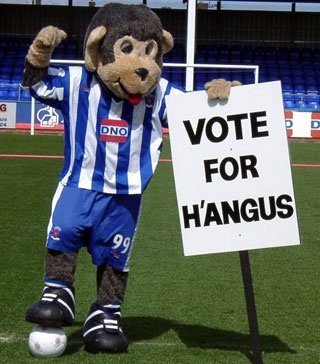
Even after two centuries anti-European sentiment and suspicion remain and on 23rd June 2016 the descendants of the original monkey hangers of Hartlepool voted overwhelmingly by 32,000 votes to 14,000 to exit the EU. Oddly this vote came after a bit of a renaissance for the French monkey who in the intervening 200 years had become a bit of a local celebrity.
H’Angus the monkey also ran for mayor of Hartlepool initially to publicise the football club, campaigning for "free bananas" for all schoolchildren. He campaigned both at matches, much to the bemusement of opposition fans, and also locally and away from the football pitch. Hartlepool is in the north east of England and has always been a Labour town and has also been in terminal decline for years following the closure of the steel works and the local shipyard. On 2 May 2002, H’Angus was elected as Mayor of Hartlepool and was then re-elected in 2005, more than doubling his vote (up to over 16,000) and increasing his majority to over 10,000. At the same time, turnout increased from 30% to 51%. In 2009, H’Angus was re-elected for a third term. Proportionally a monkey offering free bananas was actually better received by the electorate even in a hard Brexit town like Hartlepool than Brexit itself was, so no irony there!
Harold Wilson who was elected twice rather than the three times that H’Angus the Monkey managed as Prime Minister of the UK from 1964-1970 and from 1974-1976. Wilson was desperate to get the UK into the cosy club of the EEC during his first term.
During the 1960s as we floundered economically French gross national product grew at an average of 5.8% a year: it was the beginning of a French "renaissance" and of the period known as the "thirty glorious years", "trente glorieuses". In 1963, the French President De Gaulle vetoed the British application to join the EEC declaring: "l'Angleterre, ce n'est plus grand chose" ("England is not much anymore"). From this moment on, British efforts to join the EEC redoubled.
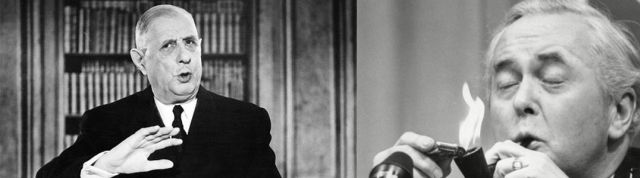
But De Gaulle said "non" again in 1967 forcing Wilson into an emergency devaluation of Sterling in order to support our collapsing balance of trade. Wilson famously said at the time “It does not mean that the pound here in Britain, in your pocket or purse or in your bank, has been devalued.”
For your information Wilsons devaluation was from $2.80 to $2.40 or 14%. The Napoleonic Wars however also created conditions destructive to the pound’s valuation. Widespread currency counterfeiting took hold at that time, leading the Bank of England to suspend the convertibility of banknotes for gold in 1797. This era in British history is known as the “Restriction Period,” because the Bank of England no longer had the ability to exchange gold for pound-denominated banknotes.
As a result, inflationary pressures took hold in the U.K. and greatly reduced the purchasing power of the pound. Widespread inflation and the pound’s subsequent devaluation occurred following the printing of money for the finance of military operations against France in additional to an artificial increase of the money supply through counterfeiting. Inflation during the Napoleonic Wars peaked in 1800, with the price of consumer goods increasing 36.5% over the previous year.
By 1814, 28.4 million British pound banknotes were in circulation, and only 2.2 million pounds of gold were held for exchange by the Bank of England. Accordingly, the pound experienced a 30% depreciation.
David Cameron who won two terms as Prime Minister like Wilson and one less to the highest office than H’Angus the Monkey. The free bananas Cameron offered the electorate the second time around were referenda on Scottish Independence and membership of the EU. Famously he won the first and lost the second but promised to stick around regardless and sort the mess out that he created. He however resigned the following week and is now fortunate enough to have a lot more time for leisure pursuits like surfing leaving the rest of us to deal with the implications which so far have included high levels of uncertainty and low levels of growth.
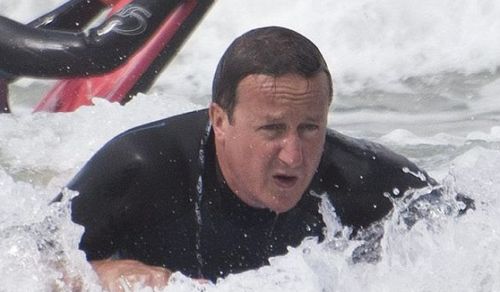
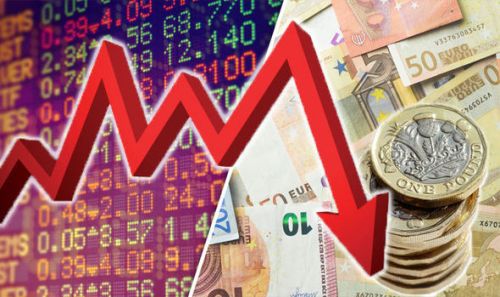
Sterling somewhat diminished already from Wilsons day at $1.50 at the time of the referendum suffered a 20% devaluation as a result of the surprise decision which was 6% greater than Wilson and 10% less than Napoleon.
Jeremy Corbyn, the current leader of the Labour Party who unlike H’Angus, Wilson and Cameron is yet to be voted into any official office but given the turmoil in the Tories and Labours rather ambivalent approach to Brexit is quite likely to be our next Prime Minister.
One wonders about the impact on Sterling of Corbyn’s far left position. The last time we had a left leaning Labour leadership like his was in the 1970’s under Wilson’s successor Jim Callaghan. This resulted in wide spread strikes, the three day week and the complete economic collapse that ultimately bought Thatcher to power..
Corbyn is famous for his admiration of the socialist economy of Venezuela, In fact in 2013 Corbyn called Hugo Chavez an “inspiration to all of us fighting back against austerity and neoliberal economics in Europe” That may be true but the result has been hyperinflation, a total economic collapse and ultimately hunger in Venezuela.
Regardless of what does happen under a Corbyn government the short term impact of a Labour victory would likely be a run on the somewhat beleaguered pound which is currently valued at just over $1.30, less than half the value in Wilsons day. Frankly I wouldn’t be surprised if it hit parity with the dollar.
I’m not sure if the children of Hartlepool ever got their free bananas but I think that H’Angus might struggle to afford such a generous promise now!
So joking aside, it’s difficult to see much upside in Sterling in the short to medium term really isn’t it? In fact the devaluation of Sterling rather like the British mistrust of Europeans we can see is a long term trend that extends back two centuries to Napoleon and Brexit is just the latest symptom rather than a cause in itself.
I think the best advice I can give to businesses is to repeat something again that Harold Wilson said half a century ago which was that - “In all our plans for the future, we are re-defining and we are re-stating our Socialism in terms of the scientific revolution. But that revolution cannot become a reality unless we are prepared to make far-reaching changes in economic and social attitudes which permeate our whole system of society. The Britain that is going to be forged in the white heat of this revolution will be no place for restrictive practices or for outdated methods on either side of industry.”
We can see the corrosive impact of low confidence and low Sterling value every week on our high streets as retailer after retailer hits the skids and negotiates CVA’s so the best advice I can give must be to do the opposite which is to take advantage of our high levels of IP and low levels of currency by exporting some kind of technology and be the that white heat of change!
And if that doesn’t work then get yourself a monkey suit and go to Hartlepool to stand for high office!