I Want Automation… and I Want it NOW!
by Sean D’Alessandro


 |
| Sean D’Alessandro |
With more than 20 years of experience in the IT Industry, Sean has been instrumental in providing and delivering strategic solutions across multiple industries in Africa and Europe. Sean’s business experience is key to assisting clients succeed through the use of the FlowCentric Technologies BPM product suite in the UK and European territory. He is surrounded by a highly skilled and dedicated team, with the ability to deliver business critical processes no matter the demand and complexity.
Change can be uncomfortable. For a CFO, the massive responsibilities and pressure to stay on top of their business, while helping to advise its forward movement, should be enough. But with the rise of digital technologies pressurizing on-going agility, is it any wonder then that so many are reluctant to embrace automation as an entirely new way of working?
Few would have guessed it, but the CFO may be the very person responsible in bringing their finance team into the modern age and its imminent future.
Don’t worry, a Digital CFO is not a robot, at least not entirely. It’s worth mentioning up front that this is not someone whose job has been replaced, but rather someone who is a pioneer in finding better ways to make their job easier. Their immediate task lies in enforcing an all-new culture and mindset in which they can properly take advantage of opportunities only digital can offer.
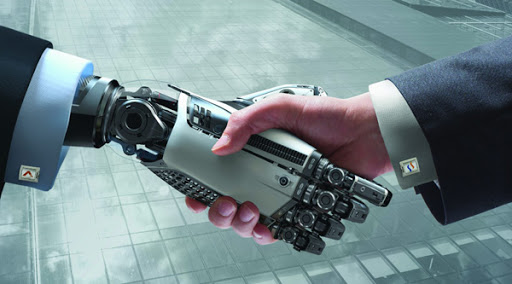
Simply put, traditional CFOs and digital CFOs look exactly the same, only the latter are willing to accept change and stay current. The digital CFO has embraced robotics and automation to assist the traditional role of the CFO within risk compliance and performance. They deploy a range of technologies to flip historical function on its head, which turns the finance department’s efficiency dial all the way up.
The digital migration is a problem within the industry as traditional CFOs aren’t willing to move forward from their current, safe environment. In a landscape where technology is reshaping virtually every business model today, digital integration is not only necessary, it is inevitable. So, why is change so scary if its core function is meant to improve?
Just look at how technology has shaped the CFOs efficiency to date. In the 1980s the fax machine allowed important information to travel so you didn’t have to, especially when delivery wasn’t an option for time-sensitive matters. Then in the mid-nineties Blackberry revolutionized business by making relevant information available on the go with their patent push technology. This was critical for overall effectiveness. There wasn’t a CFO without one.
It should go to show then, that automation will eventually win over traditional exercises to get the information you want and need. Even Blackberry had to stay agile and move their technology forward, when they announced late last year they had developed a software operating system for self-driving cars by partnering with auto supplier Delphi Automotive Plc.
By now it should be clear that integrating digital strategies and technologies are vital for your business, but what exactly are the tools you’ll want to implement and what are their benefits?
BPM is a collaboration between processes, applications and people. Digital Transformation in BPM world refers to transforming the business operations, services and models by acclimating the technical advancements in the business to leverage the ripples they created across the globe.
As, BPM cuts across different functional areas like Customer Relationship Management, Enterprise Resource Planning, Supply Chain Management, Enterprise Content Management and much more, digital transformation in BPM would also refer at enabling transformation in all these areas. SMAC, BPM on Cloud, IoT-BPM and Robotic Process Automation/Cognitive Process Services are providing opportunities to discover new business models in BPM.
If we think about the key drivers of Digital Transformation in BPM, we can say that Technology modernisation plays a key role in this. With enhanced technologies, organisations start rethinking their existing business models and will explore new and improved ways to do the business. However, digital transformation is not just introducing latest technology trends into an organisation, but it is also about implementing the cultural change.
It is about how these modern technologies are accepted and used by different people in the system. The change in customer expectations with respect to the service/product offerings, ease of use and the level of convenience it can offer are also the factors that drive DT. The internal and external actors and factors like employees, management, business competitors, business partners, customers, government regulations, laws etc. also play a key role in framing the appropriate DT strategy in any organisation.
Last but not the least, the increasing cost and competitive pressures also act as a key driver in enabling Digital Transformation in organisations of all sizes.
Digital Transformation is the new buzz word and it is changing the way we do business. By embracing Digital Transformation, organisations can optimise their existing operations, explore new business opportunities, extend their reach, and acquire valuable insights to take right decisions which helps in improving customer experience.
The BPM in this age of digital transformation not only deals with the internal processes but also takes in to account the expectations of new gen customers. Driven by customers, fueled by IT and empowered by efficient processes, the digitally transformed BPM holds the power to take the business efficiency and customer experience to an enhanced level.
.
The benefits of efficiency with the use of BPM tools extends even further. Technology is the enabler of business process automation (BPA), and it can automate workflows to the point where human intervention is unnecessary. Automation can save time and money, delight customers who no longer have to wait in line for a person to assist them with a transaction, and preclude human error.
But not every business process is a good fit for automation, so it's incumbent upon companies to determine which processes are best suited to automation and which ones are best handled by humans. How do companies select which business processes to automate?
Companies start by looking at the strategic and operating drivers for process improvement in their organizations and industries. For instance, in today's global market, nearly every company is feeling pressure to get goods to market quickly and to be first to market whenever possible. In a highly price-competitive environment, companies are also under great pressure to economize their operations to improve their margins, since it isn't always possible to raise prices.
Consequently, companies look to automate business processes that are time- and resource-intensive operationally, that are subject to human error, and that can be accelerated with automated process improvements achievable through machines and technology. If automating business processes speeds product to market, improves revenue capture, or reduces operating expenses so margins can improve if pricing needs to be kept flat, so much the better.
Automation means that you know an action is being carried out digitally as opposed to a human performing that function, therefore your compliance is in check, which alleviates risk.
There are regulatory requirements that you need to meet as a CFO. In essence you have responsibilities towards the shareholders, and you are acting in accordance with what they have effectively given you authority to do. When you say your numbers are complete and accurate, you’re saying you’ve complied with all other regulatory acts out there. Trust continues to be called into question.
Automation can help you comply with the company’s act, but that’s not a big issue, rather your inherent risks, the things you can’t prepare for, the stuff that isn’t in your face the whole time. It’s the employee having a bad day who closes off a number and rushes home. As the CFO, you trust that a lot of work has been done to ensure that number is correct. It’s your inherent risk that you’re placing reliance on, so it is a massive benefit that your internal control systems will pick up all the necessary risks associated. With a CFOs role, it isn’t one risk that will keep you up at night, so having technologies in place to assist you is vital.
A CFO can now access real-time data through a dashboard that talks to status and progress. BPM assists compliance and risk to a large degree, but you also have the visibility around what happened, when it happened and how it happened, which gives you control and alleviates further risk. This is why push data functionality is so great.
Think of it this way: if someone doesn’t have a doorbell at their home, you would have to manually go around the house and peep through windows to see if anyone is there. With automation, the doorbell is the trigger that something has changed. It’s pushing the right information to the right people at the right time, so people can make decisions around something that is wrong or is about to go wrong.
It’s having information sitting there telling you which boxes were ticked. It’s a checklist, but something is checking that checklist, saying don’t worry about it, I have this under control for you. And here’s a confirmation that it’s done.
The digital approach doesn’t have a human emotional intervention to confuse a story, it merely spits out an answer stating if it’s wrong or right. It brings back the integrity that the open public has on whether that information is correct, because it’s digitally checked.
By utilizing a range of digital tools and their obvious benefits, CFOs can completely rewire the traditional finance function, which frees them up to add real value to the company, while staying on top of performance, efficiency and risk. The Digital CFO will always be looking for the right way to automate, but first they need to deal with an expert who can advise them on a game plan.
 Powered by Majestic3.com