Electronics Companies
Your Competitors are Outsmarting You - Here are Five Reasons Why
by Mary-Anne Oldfield

 |
Mary-Anne Oldfield
It’s the 21 years of experience within the broader Supply Chain and Logistics industry that has placed me in a position to understand and identify with companies complex and everchanging supply chain and logistics needs. It’s the passion and love that I have for solutions & successes that makes my ‘job’ more than a ‘just’ a job.
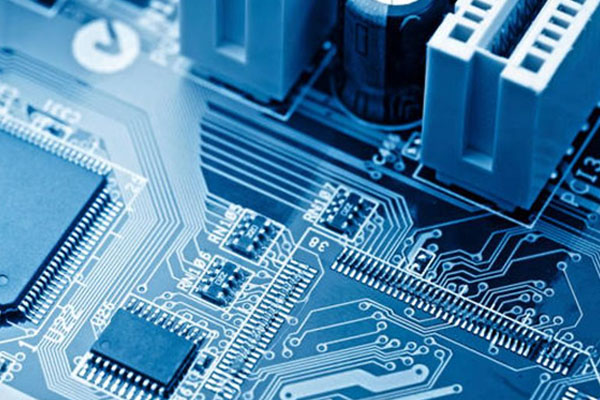
It’s a race to win the order, get the deal or sign the contract, but where will you place when your competition is way ahead of you?
Everyone knows that a satisfied customer is more likely to be a return customer. In a world of numerous options and instant gratification, customers will choose electronic companies that can give them what they want quickly, in the most convenient way with as little hassle as possible.
That means that electronic companies need to outdo one another when it comes to speed, convenience and product availability. In the race for competitive supply chain optimisation, it’s not just about ensuring that the ‘last mile’ runs smoothly, now going the ‘extra mile’ and completing it extremely quickly, cost-effectively and accurately is required to remain competitive.
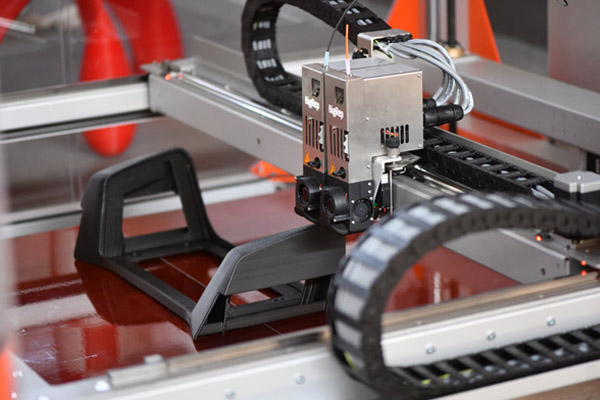
Your competitors know that their customers hate to wait. The fast-paced urgency of many buyers often require electronic products as soon as possible and sometimes the sourcing, logistics and shipping process may just take too long.
Some organisations are simply stocking raw materials and have the technology to 3D print business critical products as and when they are required - the ultimate in product on demand. Many can also do so in the closest possible proximity to where the bulk of their regular customers are located, but more about that later.
As you can imagine, this can often eliminate the need to ship anything at all.
At the very least, it drastically reduces storage requirements, time, customs duties and overall shipment costs (if they’re required at all), as well as shortening the customer-fulfilment turn around time too. Your 3D printing competitors are probably making promises that they can keep faster and more consistently than you if you’re still working in 2D.
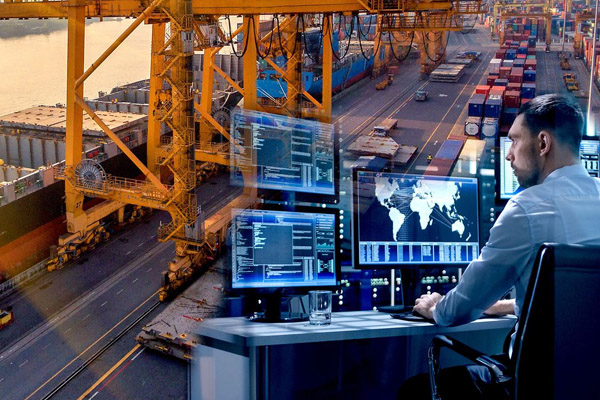
Not only can your competitors deliver, in a quicker way you may not yet be able to, but they are also now able to deliver in a highly innovative and more cost-effective way too.
Electronic companies in various parts of the world have already begun to use self-driving trucks that can drive through the night. They can transport stock faster and without having to deal with the fallibility and complexity of “human error” and enjoy more trackability and decreased security risks during the process.
They’re also using the latest geocoding system What3words, which will eventually allow them to deliver to even the remotest and most unmapped parts of the world within a 3m X 3m radius accuracy … using drones!
Electronic products need to be associated with the latest technology in order to come across as relevant. Therefore, embracing new tech would align with most EC brand strategies.
There’s a long list of new technologies already being implemented for a competitive edge, but a recent addition worth a mention is the convenience and efficiency of Voice and Vision Picking utilisation in warehouses. In a nutshell, it’s using augmented reality for a more consistent, reliable and quick way to manage, track, store and replace stock.
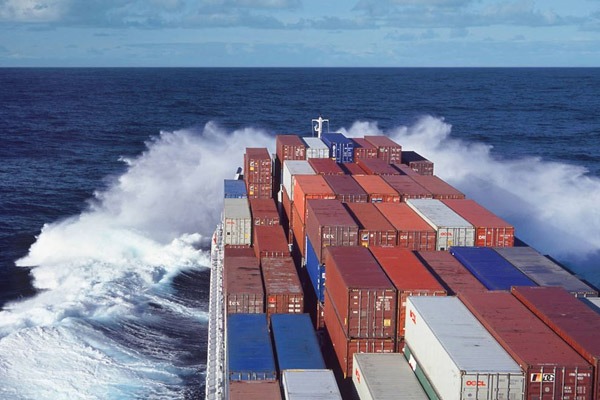
Electronic products are generally not cheap, and much of any electronic company’s assets are tied up in stock that is currently somewhere along the supply chain route. It’s still your money tied up in products until such time as it’s been delivered and paid for.
So, it makes sense that many of your competitors know where their assets are around the world at all times using satellite tracking. This way they can monitor how far along the supply chain fulfilment process these assets are. This also prevents challenges like obsolescence waste and the bullwhip effect.
Customer expectations can also be managed better should a glitch occur. Because the process is monitored and carefully managed, systems can be put in place for more rapid damage control and solution-finding should there be any threat of not being able to keep promises made to customers. As the adage goes: forewarned is forearmed.
If your competitors are using 3D technology, self-driving trucks and other more efficient technologies, they’re already reducing their costs significantly.
However, if they have other cost-efficiency strategies like cross-dock solutions, container optimisation and better purchase order management in place, they’re being even more economical.
Your competitors also know where their bread is buttered, and using the Center of Gravity Method, are leveraging studies to choose warehousing locations that have the closest possible proximity to where their biggest customers are. It costs a lot less in logistics and offers a much quicker delivery-time too.

Your competitors understand that nobody succeeds at anything if they go it alone. This is why they collaborate with their partners to innovate and constantly improve their systems and ability to deliver. Evolution is at the heart of the electronics industry.
Your competition is already using artificial intelligence (AI) to streamline and simplify the supply chain process. Large amounts of data can now be harvested from the supply chain journey and processed to create more efficient and reliable operations that are optimised, far less complex and far more lucrative.
Your competition is embracing everything that the 4th Industrial Revolution has to offer. The technology, digitisation, rapid adaptation, as well as the convenience and reduced costs that it provides. This is propelling them forward much faster than sticking with something just because it worked in the past. They wisely accept that yesterday’s state of the art may well be obsolete tomorrow.
Supply chains extended over various continents stretching between numerous suppliers, vendors and buyers can eventually become almost unmanageable. Supply chains are more of a complex network these days than a chain.
Nevermind Supply chain, now your competitors are even talking Blockchain. Simplistically, Blockchain provides transparency to every step (block) of the payment process and drastically reduce the occurrence of payment disputes as all stakeholders have access to the ledger at all times. This allows a more seamless and rapid supply chain process.
How do you compete?
 Powered by Majestic3.com