
The South African construction industry is brutal. Margins are tight, contractors and suppliers often feel bent over a barrel. They get it in the ear from unions, price changes, logistics problems, supply shortages, time frames… you name it.
Margins are often made and lost at the contract manager level and measuring everything on a construction site is incredibly complex... and measuring productivity? Even more so. Best you can do is measure the time you pay your workforce and this is where seconds translate into cents and minutes quickly become big money if you don’t get what you pay for.
I know this because I hit my first construction site in 1983 and have witnessed wasted minutes adding up at a frightening rate. You plan to start work at 8 am sharp with the best intentions, but you clock in a few minutes late, make a quick trip to the toilet, have a chat with Fred at the store, make a fresh cup of coffee and you’re surprised to see it’s already 8:30! Where did the time go? That’s the makings of a time bandit right there! Nevermind the ciggy in a quiet place after the coffee is finished.
The makings of a Time Bandit

I have sat at board level as contracts manager and I've also swung hammers as an engineer, carpenter and tradesman from Hermanus to Honduras.
If there is one thing I’ve learned in this business, it's how much time can cost when it’s lost.
If you’re paid for your time and you waste that time you are not keeping your end of the bargain - HR experts call it ‘time theft’ and whether it’s intentional or not, time bandits can seriously rob the profit margin. Without an accountability system in place you’ll have a workforce that’s wasting your time, wasting your profit, which will be a waste of your efforts.
How to Jippo the system

There are many loopholes for Time Bandits who are not held accountable.
There’s Beating the Clock: Time bandits know you get a few minutes grace with most clock-in systems and they milk it. It defaults to the time they were meant to be there and not the time they actually arrived or left.
Then there’s Buddy Punching, getting clocked-in by a mate when you’re running late or feel the need to be somewhere else. Who’s to know? Nevermind natural tendencies to Goof off, Zone out, Socialise or take Personal Calls on the company clock.
Other clocking-in systems that are a waste of time and are Fudging the Worksheets are those that are inconsistent or allow for too much leeway.
If you can write whatever time you want in the ledger with impunity or clock-in remotely from your bed when you’re miles offsite, or maybe you just know the supervisor will turn a blind eye to the odd 20 minutes of tardiness here and there, then the clock-in system does not work!
The harsh reality is that it’s a free-for-all, and even if your workforce arrives exactly on time how do you measure their productivity after that without supervision? It’s as simple as a Time Bandit arriving on time and then finding a nice warm spot in the sun out of sight to take a long lekker snooze, and then YOU lose.
High tech does not always solve the problem
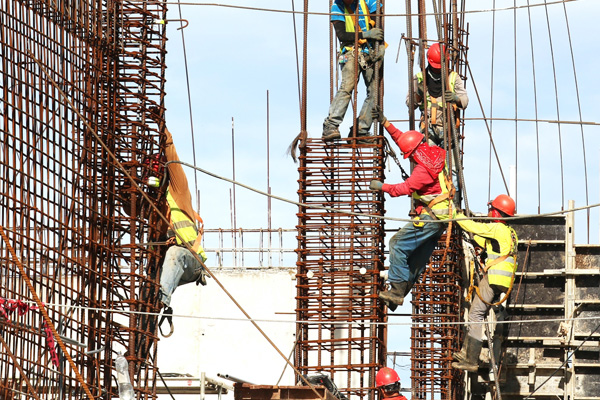
Building sites are not known for easily available infrastructure. Everything still has to be built!
So, electricity, internet access, delicate hardware and other tech-based resources that use expensive biometric and time auditing systems aren’t truly portable or easy to set up and use. Plus, these finicky computers and systems don’t cope well in a harsh and messy environment that usually comes with construction.
They cost loads and are a mission to set up and keep secure because security is almost always a problem on a building site without proper walls, gates, windows and alarm systems.
Also, these systems lack the personal touch. People are not robots, they are human beings that need interaction, motivation and to be held accountable. It’s human nature to do as little as possible if you feel like you can get away with it. These expensive “solutions” are a lost opportunity to engage with and monitor staff.
How much money are you losing to Time Bandits?

There is no way of knowing unless you measure it. With real-time data, you can see how much you have lost in prior jobs and bring those margins back up.
Look at it this way, based on the assumption that the average worker costs R0.42/minute.
If a worker wastes only ONE minute per day, that equates to almost R10.00 per month and R120.00 per year. No big deal, right?
But what if they waste roughly 10 minutes per day as I did in my example earlier just making coffee or any other time bandit tactic? That’s R1,200.00 per year.
Now, if you have 100 or more workers clocking in late or out early, just making coffee, taking a call and having a cigarette every day for just ten minutes then that quickly escalates to a cost of over R10,000 per month and R120,000.00 per year.
I’m sure there’s a lot you could do with an extra R120,000.00 per year by just managing 10minutes per day better! Do the Maths across your entire company and the numbers will scare you!
Mobility, accountability and productivity without much money

You don’t need expensive impractical systems that work with facial recognition and fingerprints that don’t read well through thumbs covered in calluses, dust and concrete. You need a system that is truly mobile, inexpensive and definitely one that is easy to use. Big sites and small sites should not have different setups or measurement criteria, they should, in fact, have exactly the same system and neither should require setting up all!
What about accuracy? Accounting and administrative queries can be a real pain in the backside if you don’t have a system that allows for accurate data collation in formats that are suited to payroll systems in real-time.
The more time spent doing admin the less time spent supervising the critical path of the build.
If you are familiar with any or all of these challenges, then I know that you’ve been through some rough times.
Get in touch and I will tell you about a system that will offer you nothing but Better Times.




 Powered by Majestic3.com