
The word robot can be quite evocative. It conjures up images of the ‘evil’ robots in sci-fi movies that are out to destroy mankind.
Authors like Isaac Asimov and Ray Bradbury proceeded by filmmakers Stanley Kubrick and James Cameron amongst others, have painted a terrifying picture of what life could be like when the machines take over.
The reality is far more mundane. Robots are here to stay and have added a whole new dimension to what ‘Work’ might look like in the subsequent chapters of the 21st century.
In the last decade, we have seen the rise of artificial intelligence (AI) and machine learning (ML) based software programs that are smart enough to learn from watching human behaviour and learn by observation and repetition. Intelligent Automation (IA) and Robotic Process Automation (RPA) are the common terms used to describe the execution of tasks and processes using software robots (bots).
Contrary to the grim apocalyptic impression the sci-fi storytellers would have us believe of the future dynamic between man and machine, organisations have found we make a pretty good team. The human capacity for creativity, imagination and lateral thinking paired with the speed, consistency and precision of bots provide desirable and efficient outcomes. Bots can do all the mundane and repetitive tasks, eliminating the shortcomings of human error, fatigue and boredom.
We have seen a rise in the adoption of RPA across industries over the past decade, and one industry sector that has seen a big uptake in RPA projects is Insurance.
1. New Solutions to Old Problems

If you couldn’t email or photocopy a document, you’d have to write it out by hand. At least ten minutes of your life you’d never get back again! Luckily this isn’t the case and you’re free to focus on more sophisticated and beneficial tasks.
Outdated IT systems make staff have to do tasks that feel like the equivalent of screwing caps on toothpaste tubes all day. Tasks that could just as easily be completed by a ‘robot’ and are a waste of their real skills.
A doctor with a full waiting room doing an inventory of his medication instead of seeing patients is anything but efficient. There are more important things to attend to than admin. However, the admin must still be done. You need to determine what tasks can be done by a bot and what tasks are best executed by a human being. The right ratio could prove crucial to the success or failure of any business.
That’s where artificial intelligence (AI) bots come in to liberate your staff. It’s time to forget the faulty printer and focus on emails.
2. Millennials want Tech, not Repetition

Another issue that most traditional industries, not just banking, finance and insurance, face, is how to attract and retain a talented workforce.
If millennials don’t feel like they are being challenged to use their skills and or learn new ones for something important, they will leave. It is not easy to attract the best and brightest among today’s millennial workforce, as they don’t easily tolerate mundane and repetitive work. They want occupations that give them a sense of purpose and challenge them to evolve and learn new skills.
Introducing RPA has helped organisations remove a significant chunk of repetitive work away from human workers and engage them with more creative, strategic and meaningful work.
3. Ifs ands or bots - Bored millennials are known to stray

According to the 2020 Deloitte Global Millennial Survey, only 40% of millennial workers are highly satisfied with their jobs.
Companies that want to hire the best need to support them by letting them do what they do best and automating the rest.
This is why industry leaders like Amazon and Uber have taken a bottom-up approach to automation to support a long-term automation first strategy and also to empower employees to collaborate and bring their best innovations and ideas forward.
4. Not afraid of the ‘big bad bots’
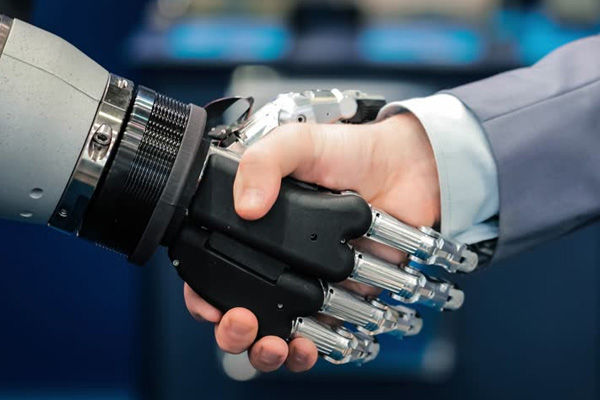
Instead of perceiving automation as a threat to their jobs, staff in these leading organisations saw automation as a tool to help free up their time to focus on more creative endeavours.
Employees felt empowered to work with automation tools and design their own automation to help them in their roles. Collaboration doesn’t just help with employee morale, it boosts scalability and profitability as well. A study at Stanford found that companies that supported collaborative work found that 64% of staff stuck to a task longer to produce better results.
5. How to make them want to stay

Another factor in the context of employing millennials staff is that it’s one thing to attract them to your organisation, quite another to make them stay.
Businesses need to give them a reason to stay.
One of the ways that have proven successful in engaging and retaining top millennial talent is investing in career development through upskilling. In the ‘Automation First’ era, this means supporting your staff with training to ensure they have the skills to work alongside bots. Amazon recently announced a $700 million initiative to upskill 100,000 employees.
In summary, automation is here to stay. Humanity’s fear of the robot has proved to be baseless. In fact, bots are able helpers that allow us to invest our time and energy in more meaningful work.
How enterprises work with these emerging technologies and retain top talent through training to drive change and digital transformation will determine whether they lead or are left behind.





 Powered by Majestic3.com